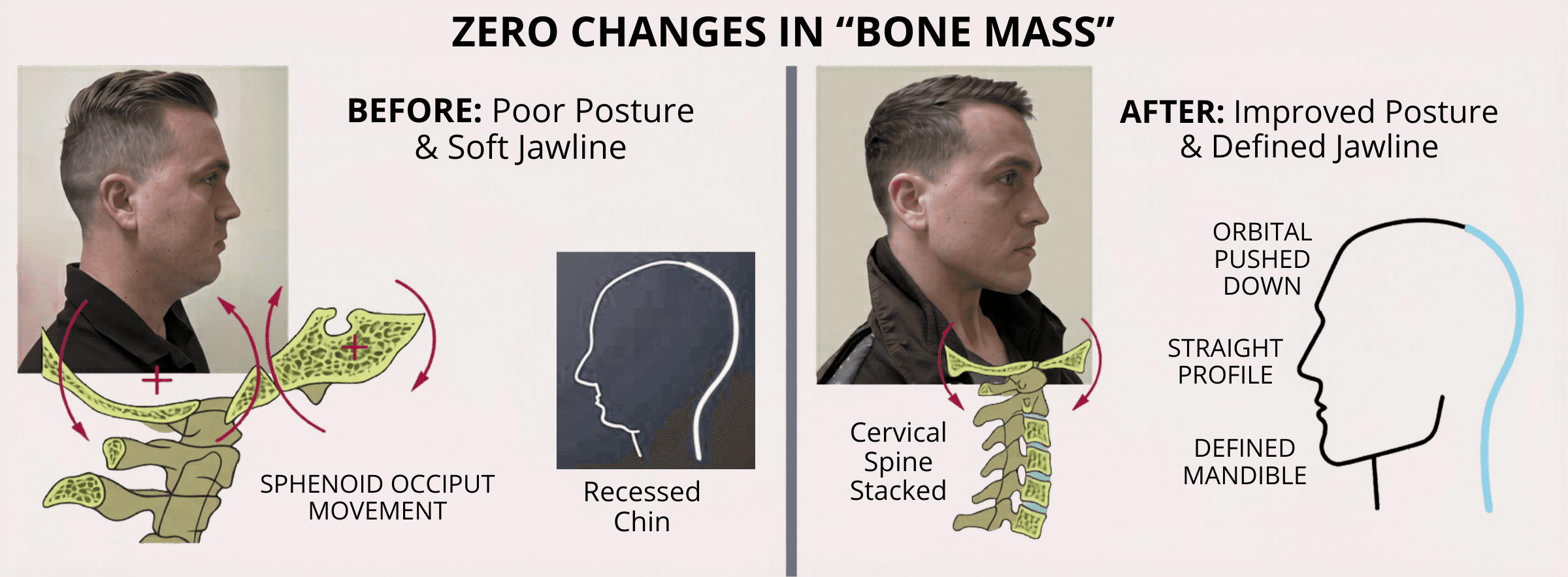
I'm going to predict something about your face...
If you are reading this, most likely you think your mandible is too narrow. Or your side profile is shit.
I'm going to predict something about your face. One eye is lower than the other. Your jaw deviates to one side at rest. On one side, your side profile looks better. Your smile pulls, and you look like an alien when taking pictures with the back camera. This is the same problem as your narrow mandible. I'll prove it later.
Maybe you've thought this for years. Maybe it's the single feature you've been trying to fix. What if I told you that your mandible has never been narrow. And that your ramus does not need more "bone mass". And everyone telling you it's genetic? They are all wrong.
I'm 35. Two years ago I got out of an eight-year relationship. Didn't see it coming. The first six months after, I tried to date and got absolutely nothing. Not bad numbers. Zero. I'd go out, I'd open, I'd be polite, I'd be funny, I'd leave alone. After enough of that I started doing what every man in that situation eventually does, which is look in the mirror for a long time and try to figure out what's wrong with my face.
That's how I found looksmaxxing.
I went deep. I'm not going to pretend I was casually browsing. I read every sticky thread on .org for three months straight. I did try HGH peptides. I researched a bone mass cycle and almost ran it. I bought mastic gum. I did bonesmashing in my bathroom at 1am with a wooden spoon because I'd convinced myself I needed periosteal apposition on my zygomatic arches.
But I often felt like a dinosaur watching the tiktoks, and the whole time I had the same thought running in the back of my head:
My mandible is too narrow. I have no ramus. My face is too long. My face is asymmetrical. My jaw is recessed. None of this is going to fix it. The window closed at 18 and I missed it. This is genetics. It's "over".
If you're reading this, you've probably had some version of that same thought. And I want to tell you something, because I had to learn it the hard way and it cost me two years and several thousand dollars: you are almost certainly wrong about what's actually wrong with your face.
Not wrong that something's wrong. Wrong about what.
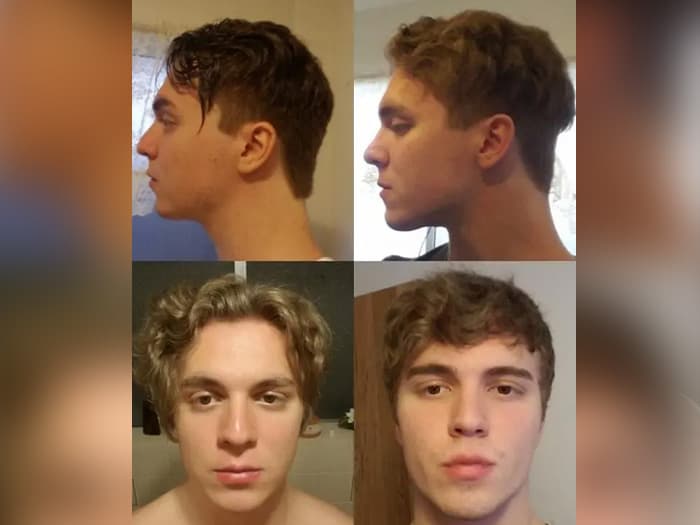
The category error nobody else is putting together
Here's the thing that took me an embarrassingly long time to figure out.
Almost every guide on .org, all the TikTok gurus with PDFs, every Discord conversation all use the same phrase. Bone mass. You need bone mass. Gotta build bone mass. Cope vs. real bone mass. Bone mass is genetic. You can't build bone mass past puberty.
When people say "bone mass" (denser bone), what they actually should say, biologically, is one of two things:
One — periosteal apposition. New bone tissue laid down by osteoblasts on the outer surface of an existing bone, making it physically bigger. This is what people are reaching for when they bonesmash the cheekbones. The theory is Wolff's law, recently the theory is subperiosteal hematoma ossification. The cells lay down new mineralized matrix. The bone gets larger.
Two — endochondral or appositional growth at active growth sites. The mandible getting longer at the condyles. The maxilla growing forward and down. The ramus extending in actual length. The cheekbones adding layers of cortical bone. This is what kids do during puberty. It's driven by growth plates, hormone signaling, and active growth fields.
Now I'm going to do something the rest of the tiktok guys won't:
I'm going to fully concede the .org argument.
Both of those processes are extremely hard to do after puberty. Growth plates are closed. Hormonal environment is gone. Osteoblast signaling that responds to mechanical load is dampened. HGH might do something at the margins at 18 if you stack it perfectly. At 28 you're paying for liver stress and water weight, not bone. The guys saying "you can't build bone mass past puberty, cope or genes" are right about the narrow technical claim they're making.
You don't need bone mass.
Read that again because everyone who reads this piece gets to this point and tries to argue with it. You don't need bone mass. For almost everyone reading this, periosteal apposition isn't happening at scale and chasing it is the wrong fight.
But (almost) everybody is missing the actual big brain play:
Bone mass is one biological process. Bone repositioning is a completely different biological process. And bone repositioning runs for life.
That's the entire argument. Everyone is arguing about whether you can change the size of your bones. Almost nobody is talking about whether you can change the position of your bones. And the answer to the second question, which is the question that actually matters for how your face looks, is yes: overwhelmingly, demonstrably, scientifically yes, and it doesn't even require you to be young.
Bone moves. For your entire life.
You already know this. You just haven't connected it.
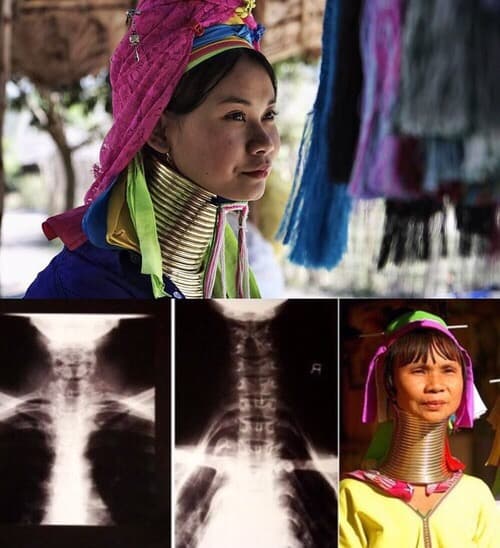
Have you seen the women in the Kayan tribe in Myanmar who wear brass rings around their necks? The bones aren't growing. The clavicles and ribs are being pushed down and the cervical vertebrae are being repositioned. Adult bone. Repositioned by sustained directional load. The same logic applies to Chinese foot binding. Adult bones in the foot, including the metatarsals and the tarsals, were permanently repositioned through chronic compressive load applied during childhood and maintained through adulthood. Not because new bone grew. Because existing bone walked along its sutures and articulations into a new configuration and then remodeled to hold that configuration. The shape of the foot changed.
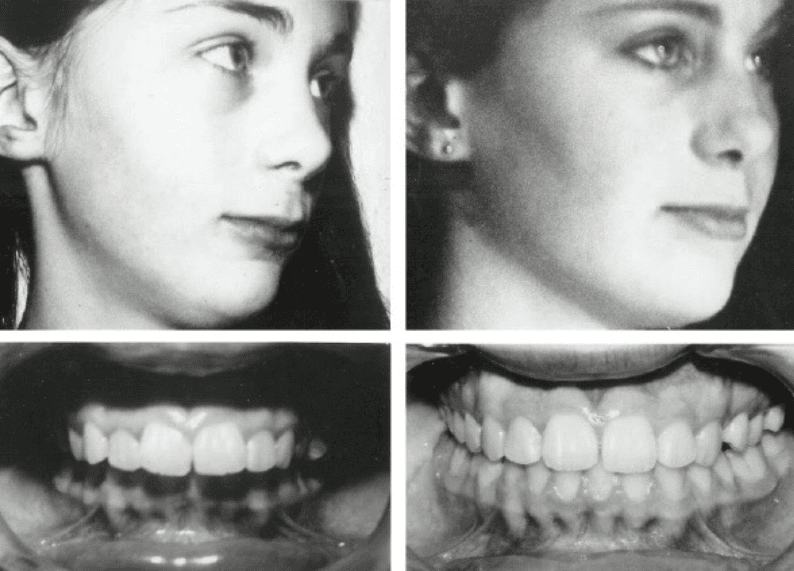
Every adult who has ever had braces has had their teeth moved through their alveolar bone — and there are tons of them complaining that their face "collapsed", or became asymmetrical, or their eyes became hollow (recession, of course). Adult bone, post-puberty, repositioned by sustained directional force applied through brackets and wires. The teeth move because the bone around the teeth is repositioning. If adult bone didn't move, braces wouldn't have these effects on adults. They obviously do. (Also check out Melvyn J. Baer's "Patterns of Growth of the Skull as Revealed by Vital Staining.")
The skull, by the way, is 22 separate bones held together by sutures. Sutures are not fused in adults. This isn't speculation, it's measured. Heisey and Adams in 1992 used strain gauges on adult cranial sutures and got 17 to 70 microns (about a strand of hair) of bone displacement under external load. Retzlaff did histology on elderly cadaveric tissue and found intact vascular and neural networks running through the cranial sutures, which would be biologically impossible if the sutures were truly fused. The skull is, anatomically, a 22-piece articulated rig held together by living, flexible, force-responsive joints. Your entire life. For a deeper dive on the Heisey-Adams and Retzlaff evidence, see Do Cranial Bones Move in Adults? The Evidence.
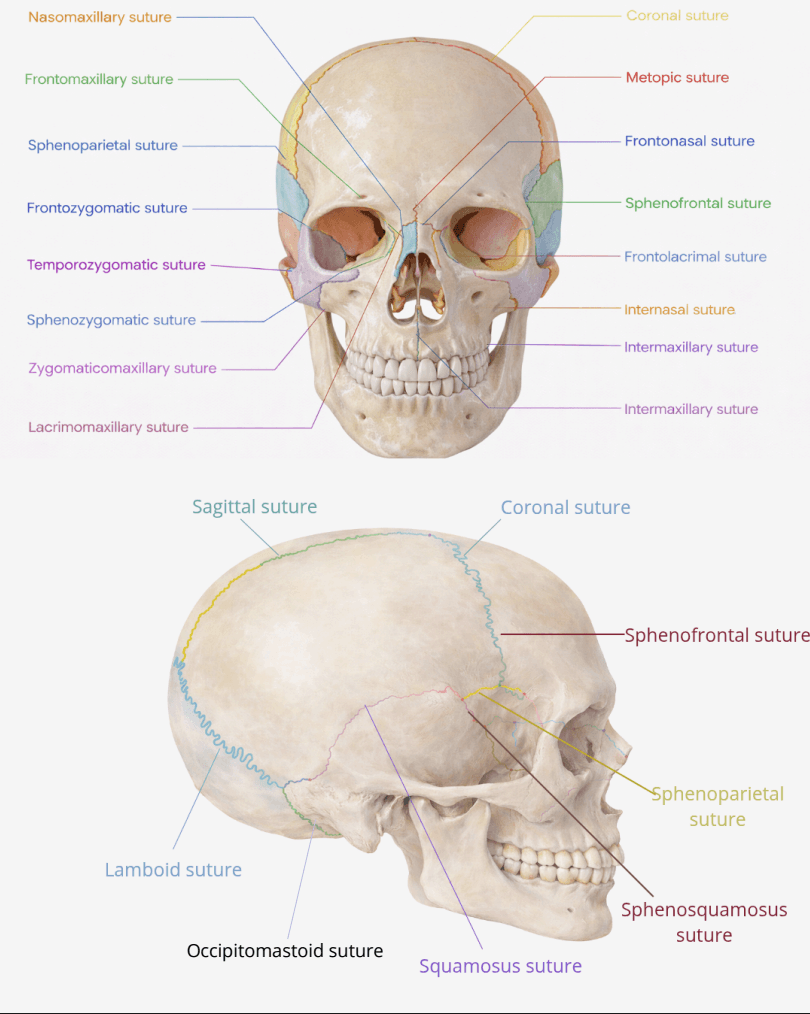
There are 1000 microns in a millimeter. Divide the total microns by the daily rate — around 50/day. 1000 microns ÷ 50 = 20 days for one millimeter. Given counterindications during the day such as posture, gravity and natural movements driven by cerebrospinal fluid, the timeline for a millimeter in 60 days makes sense. And it's all about the millimeters.
This is the central fact that breaks the bone mass frame: you don't need to grow new bone to change your face. You need to move the bone that's already there.
You don't have a narrow mandible — and I'll prove it to you right now (jutting)
Here's an extra piece of proof, on top of everything I just said. It's free and it takes ten seconds.
Stand in front of a mirror. Look at your jaw at rest.
Now jut your lower jaw forward. Not hard, just enough to bring the lower teeth in front of the upper teeth. Hold it there and look again.
For almost everyone reading this, the mandible just got visibly wider. It's not an optical illusion. The bone literally appears broader from the front when it's protruded forward.
Why? Because your mandible isn't actually narrow. It's positionally narrow.
Here's the mechanic. The condyles of your mandible — the two knobs at the back that articulate into the temporal bone — sit in fossae on the underside of the skull. The position of those fossae is determined by the position of the temporal bones, which are partly determined by the occiput, the sphenoid, the parietal bones, and the maxilla. If your maxilla is narrow (and almost everyone reading this has a narrow maxilla, because almost nobody alive in 2026 grew up with proper tongue posture and hard nutrient-dense food), the condyles get drawn inward toward the midline to meet the bite. The whole mandible rotates inward and downward. The face elongates. The chin recedes. The jawline weakens.
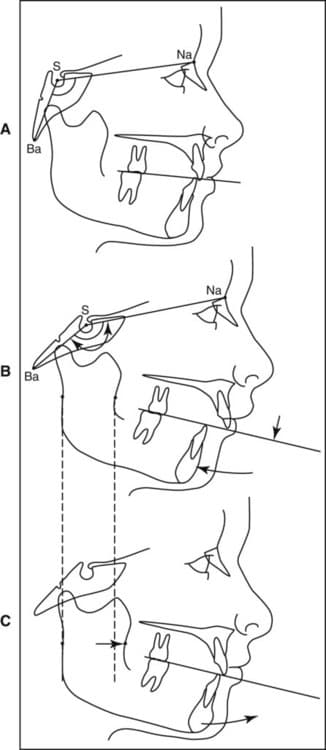
You think you have a small mandible. You actually have a maxilla problem that's forcing your mandible into a small position.
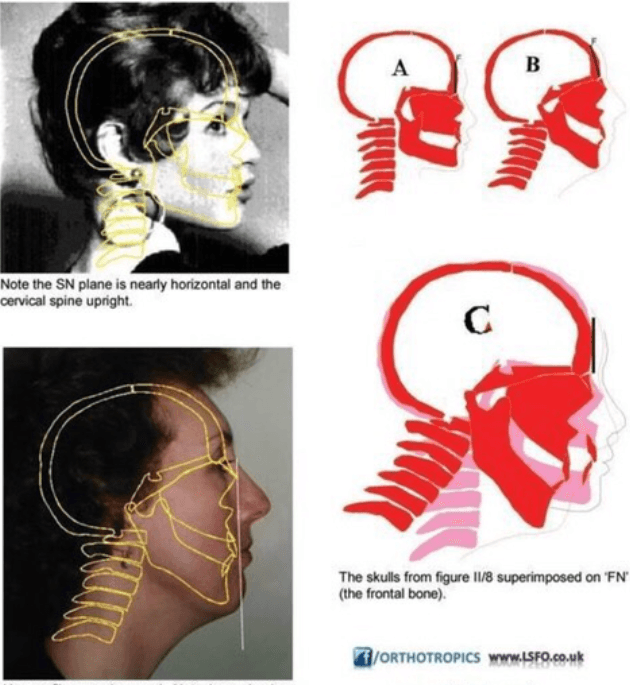
Widen the maxilla and the condyles flare outward, the bigonial width increases; position it forward and the chin comes forward, the ramus appears taller, the facial height shortens. The mandible didn't change. Its position relative to the cranial base changed. And from the outside, that reads as "I have a wider, stronger jaw now."
The jut test is the cheap proof. You can see it in your own mirror in ten seconds. Your jaw isn't structurally too small. It's sitting in the wrong place because something above it is in the wrong place.
That changed everything for me. I'd spent eight months researching mandibular advancement surgery before I figured this out. I was about to drop $40,000 on cutting a bone that wasn't actually the problem.
What everyone who's gotten real results is actually doing — and the limits of thumbpulling and mewing
Once you have the repositioning frame in your head, the entire scene re-reads itself. Every result that worked. A lot of what people think is making them work turns out to be a side effect of the actual mechanism.
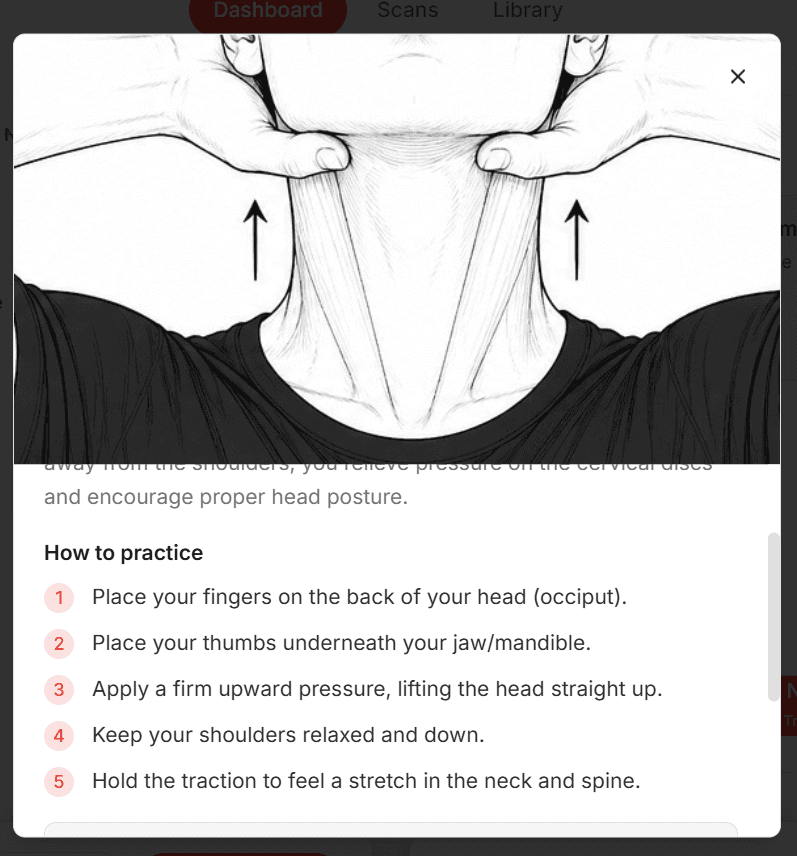
The chin tuck / neck curl / hyoid training crowd has been right about something important and slightly wrong about the mechanism. Chin tucks and neck curls genuinely work. People who do them consistently see real changes in their jawline and lower face. The reason they work isn't, as the videos usually claim, that you're "building the deep cervical flexors" or "strengthening the platysma." Or at least, that's a small part of it. The actual reason they work is that they reposition the atlas (C1) and through it the cranial base, which cascades upward into the position of every facial bone. If your atlas is rotated and tilted (and almost everyone with forward head posture has a misaligned atlas), your occipital bone is sitting in a torqued position. The occiput articulates with the temporals, the parietal bones and the sphenoid. The sphenoid is the keystone bone of the entire midface. A rotated atlas pulls the whole face out of position from the back. Chin tucks accidentally reposition the atlas through repeated movement. Neck curls strengthen the muscles that hold the atlas in a more correct position. But if you target the atlas directly through cervical traction, suboccipital release, or for example neck traction (you can test it right now), you get the same effect faster and more completely.
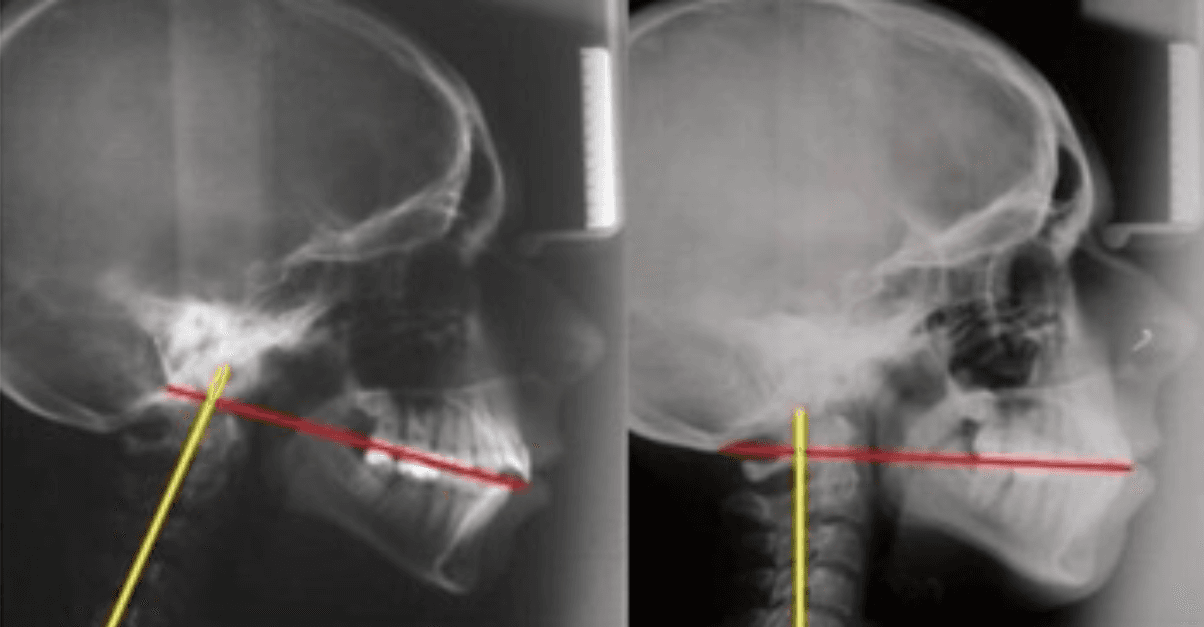
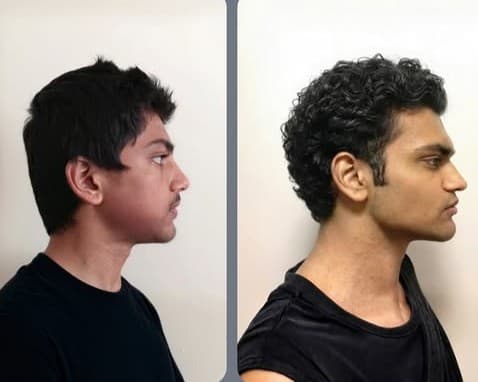
Jordan Wood, I'm sure you have seen his undeniable change. All he did was push on his maxilla, not the other bones. He says he did it every single hour for months, and that's what he attributes as the necessary variable. Sure, but he also said he corrected his forward head posture and his lateral pelvic tilt, gaining about 1.5 inches in height. If he had combined what he's doing with direct sutural traction, he'd get those results in about a third of the time.
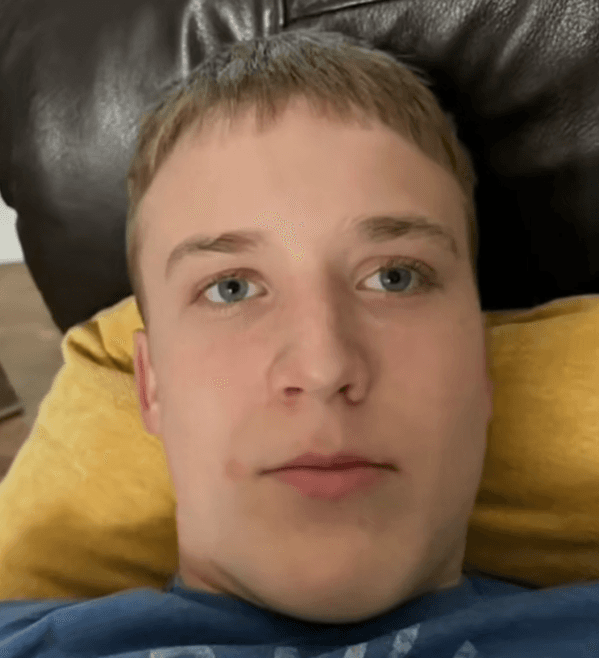
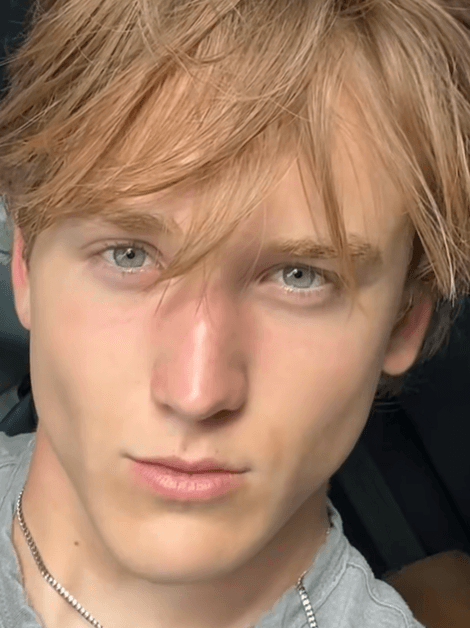
Oscar Patel is blowing up and he's a good example. Read what he actually says caused it, and you will find about half of them are what I'm talking about: posture corrected, fascia released with thumbpulling, muscles retrained to apply force in the right direction. He stumbled into a partial repositioning protocol. Without using the words, he's describing exactly what I'm telling you. He pushed his maxilla into a more forward position via sustained tongue load. He released fascia restrictions that were holding the cranial base in a torqued configuration. He re-anchored the head over the spine with posture work.
What Patel doesn't do is suture traction. Which means his thumbpulling is working against his whole skull, and stalls on people who need direct sutural intervention. Some of you have been mewing and thumbpulling for two years with nothing, and that's why. It's not that the technique is fake. It's that the technique is loading the wrong tissue for your strain pattern.
By the way, Mike Mew himself, when asked about manual sutural therapy (MST), has agreed that it's the logical next step beyond mewing. He's just not going to be the guy who builds it, because his entire identity and brand is bound up in mewing. He's not wrong about mewing. He's just downstream of his own commitments. If you watch carefully, the people around Mew who don't have his branding constraints are all moving toward direct suture work.
The pattern is consistent across the entire scene. Every technique that produces results, produces them through bone repositioning. The techniques that targeted bone mass directly mostly didn't produce much. The techniques that targeted something else and accidentally produced repositioning as a side effect are the ones with the transformations attached to them.
Once you see this, you stop asking "which technique builds bone mass" and start asking "which technique is the most efficient way to reposition the bones that are already there." Those are very different questions with very different answers. For a side-by-side breakdown of every approach in this scene and what each actually does, see Every Facial Asymmetry Fix Compared.
What I'd tell 33-year-old me
If I could go back and hand a sheet of paper to the version of me who was just starting this two years ago, here's what would be on it.
Stop chasing bone mass. You're not getting it, and even if you got a fraction of it the gain would be invisible. Your face is not failing because your bones are too small. Your face is failing because every bone in your face has collapsed into the wrong position. The bones are there. They're in the wrong place.
Identify which bones are out of position and in which direction. Applying generic upward and forward tongue pressure to a face with a lateral strain will do little on its own, and even less the older you get. Applying directed rotational traction to the same face will move it in weeks.
Combine layers. Mewing alone is weak. Thumbpulling alone is weak. Chin tucks alone are weak. Together, calibrated to your specific strain pattern — with cervical traction, facepulling, hard-chewing to loosen sutures, fascia release, posture added in — they're powerful. The reason Patel's results look like a miracle and yours don't is that his protocol happens to load three layers at once and yours is probably loading one. Bone doesn't move alone. The whole cranial system has to move together.
Be patient about the timeline but impatient about the diagnostics. Bone repositioning is real but it's not fast. Sutures creep slowly. Realistic visible change is a 60 to 90 day window for the first significant shift, and 6 to 12 months for the full result. But that timeline starts the day you actually know what your strain pattern is and start loading correctly. Every month before that is a month of guessing. Get the diagnostics done first.
Why I'm writing this
So. Why am I writing this. And what is the connection between how ugly you are in back camera pictures and your side profile
Eight months ago I started talking with Anna, one of the MoveBone founders, for one-on-one help. I paid her (gladly). She fixed things in me that two years of looksmaxxing hadn't (turns out I had a torsion, a lateral strain, scoliosis and a severe maxillary cant, which was also part of my headaches, brain fog and lack of discipline, or that's my hypothesis at least). Three weeks ago she sent me the app. One frontal photo input. The app reads your asymmetry off it, that's your strain pattern. My first thought: this is the right protocol, but misses a core audience who needs this. Too bad everything is pink? or does anyone care? “hey anna, let me write something for the people who would actually really need this (you). Because you are fixing things you are not even marketing properly“
Here's what the app does and why you should care.
The asymmetry and the recession are the same problem. Bones don't collapse evenly. When your maxilla dropped, it dropped harder on one side. When your occiput turned and your sphenoid rotated fucking up your facial width to height ratio, it rotated one direction. When your mandible receded, it deviated. The lopsided face in the front camera and the weak side profile are the same collapse, read from two angles.
Here is what nobody is fucking talking about: Forward growth is what fixes asymmetry.
A face growing forward becomes symmetrical as a side effect, because forward repositioning doesn't permit sideways drift. You don't run two protocols. You run one. You just have to target that forward growth more on the side which is more recessed, working systemically on your whole body and cranium. The asymmetry resolves and the side profile sharpens from the same work, because they were the same problem the whole time.
The app reads your pattern, then hands you a daily protocol calibrated to it, suture traction, cervical work, posture, tongue. Vector-specific forward growth and postural correction.
If you've been chasing bone mass or mewing for two years and getting nothing, or partial results you can't explain, this is what you need. Find out how your face actually fell. Either stay with the program or reverse engineer your own solution from the results. Of course it still requires work, but I guarantee you, you will see the first result in 60-90 days. It's the first thing I've seen in two years that's based on the right mechanism
See your strain pattern in 2 minutes. Free.
The face you have right now isn't your genetic ceiling. It's your loading history. Change the loading, change the position, change the face.
I wish I'd known that two years ago.
— Michael, 35. No affiliation with MoveBone beyond this piece. Not paid.